System.init()
The story behind the systems thinker.
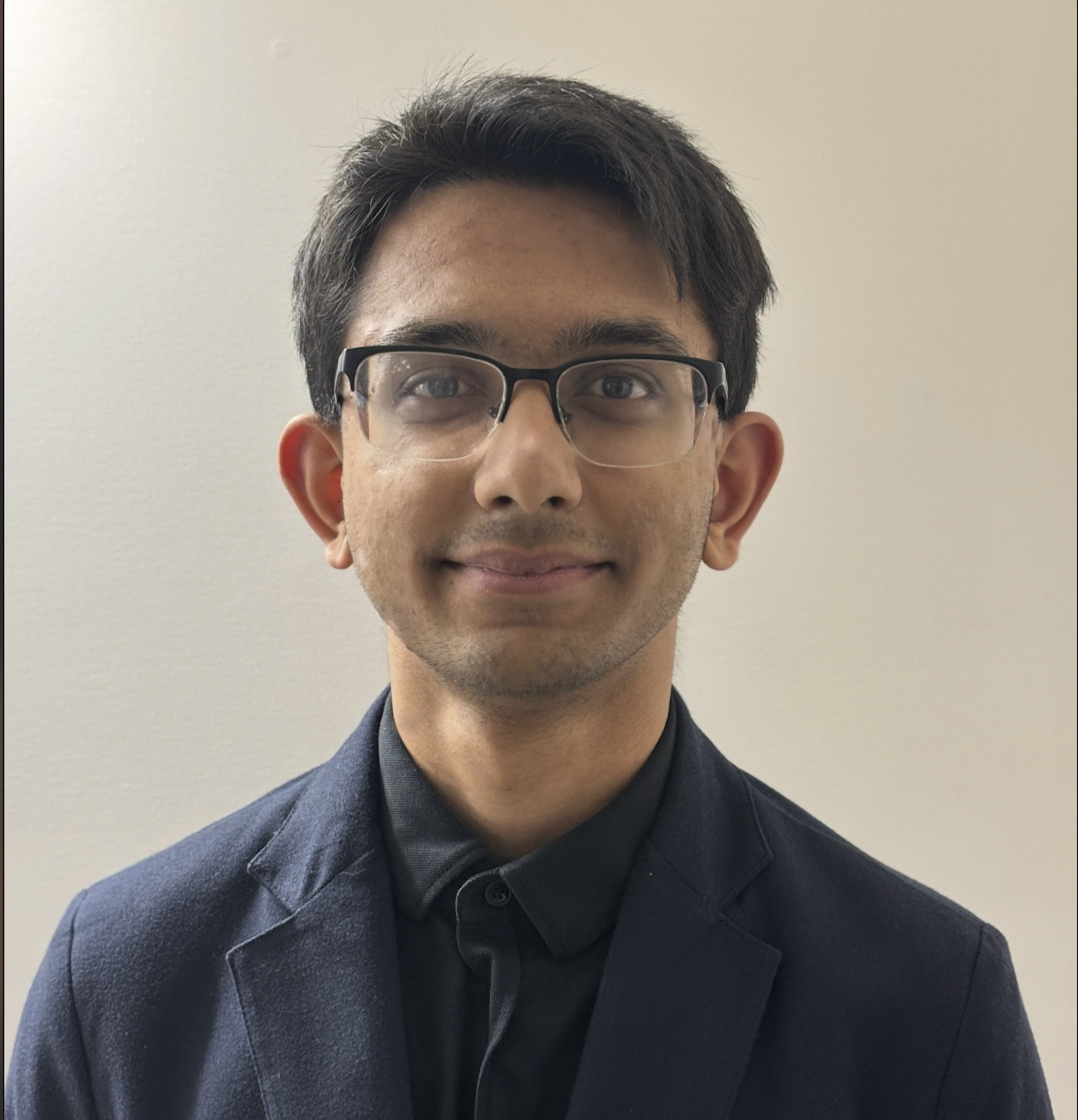
My interest in engineering started with robotics—moving atoms. It evolved into software—moving information. Today, I focus on the 'plumbing' that makes AI viable: the infrastructure, cost-efficiency, and interpretability that allow powerful models to function in the real world.
Whether I am architecting a distributed storage system in C, deploying EfficientNet-B3 to production via Railway and HuggingFace, or researching LLM-based annotation pipelines on HPC clusters — my goal is the same: build systems that are not just fast, but reliable, transparent, and trustworthy.
Engineering Philosophy
Systems First
Optimize the whole before the parts. A 10× faster model loses to a 2× faster pipeline.
Responsible AI
Interpretability and fairness are constraints from line one — not features bolted on at the end. My AIES-26 research asks whether humans actually accept algorithmic explanations, not just whether they exist.
Efficiency Obsessed
Tokens, milliseconds, and bytes are the budget. Class-imbalanced data, cold-start inference, GPU memory pressure — every project on this site is a different version of "make it work under real constraints."
Education

Penn State University
Schreyer Honors College
B.S. Computer Science
Minor in AI Engineering
Research
"Do Personalized Evaluation Functions Reflect Human Preferences? A Study of Weighted Proximity in Algorithmic Recourse"
My contribution:
- Engineered the AWP evaluation pipeline and ran ablation studies across 5 distance metrics
- Wrote the experimental design section; designed the user study instrument
- Result: AWP-generated recourse achieved 84% human preference prediction vs. proximity-only baseline
"LLM-based Codebook Annotation for Political Science Text"
Research question:
Can LLMs reliably annotate political events using expert-defined codebooks — and do they follow definitions, or just label-name heuristics?
Novel contributions:
- Definition compliance metric — swapped-label accuracy to test whether models use definitions vs. surface label names
- RAG-augmented annotation pipeline (k=5) — weighted F1 = 0.7012 vs. 0.6494 baseline
- Running experiments on PSU ICDS HPC across 3 datasets: CCC, BFRS, Manifestos
Experience
AI Innovation Fellow
Deloitte June 2026 – Aug. 2026Selected for competitive AI Innovation program — building production software systems and scalable AI infrastructure for enterprise applications. Philadelphia, PA.
Undergraduate Research Assistant
Penn State — Prof. Qunhua Li Jan. 2026 – PresentEngineered end-to-end NLP pipeline for large-scale text annotation on the ICDS Roar HPC cluster using distributed compute. Designed automated evaluation metrics comparing LLM annotation outputs across thousands of political science text samples.
Systems Programming Learning Assistant
Penn State University Aug. 2025 – Jan. 2026Guided 100+ students in C and Unix systems programming — memory management, process control, file I/O, and concurrency. Reduced runtime errors by 30%.
IT Summer Associate
UPMC June 2025 – Aug. 2025Engineered Nursing Matrix application using ASP.NET Core and C#, integrating Epic EHR data across four hospital units serving 200+ staff. Architected RESTful API layer with Redis caching, reducing query latency 18% under concurrent load.
AI & Automation Developer
Catalyst Solutions May 2024 – Sep. 2024Built AI and RPA solutions to automate business processes on the Artificial Intelligence/Automation team. Worked with Generative AI, OpenAI API, N8N workflows, Google Cloud, and Google Colab. Remote.
Open Source
Implemented CharacterErrorRate metric — ignite.metrics.nlp
Contribution:
- Character-level Levenshtein distance metric for ASR/OCR evaluation — fills a gap in ignite's NLP metrics suite
- 235 lines of implementation · 15 test cases · full Sphinx documentation
- Shipped in v0.5.2
Current Focus
Honors Thesis — NLP Research
LLM-based codebook annotation for political science text with Prof. Qunhua Li (Penn State Statistics). Novel contributions: definition-aware synthetic QA generation and a definition compliance metric. Targeting EMNLP / ACL venue.
Deloitte AI Innovation Fellow
Starting June 2026 — building production AI systems and enterprise LLM applications in Philadelphia.
Portfolio Projects
Shipping production-quality ML products: SkinIQ (live at skin-iq.vercel.app), LectureLens (in progress). Each project goes from model training through full deployment.
Beyond the Resume
FIRST Global Mentor
5 years mentoring FTC robotics teams across 4 countries (Belize, Niger, Rwanda, Bolivia). 50+ students. Leadership under hard constraints — robots have to work on competition day.
Ri3D Founding Member + Mechanical Lead
Robot in 3 Days — full competition robot designed and built in 72 hours. Ships under pressure.
Reading
Currently working through Kleppmann's Designing Data-Intensive Applications. Long reads on infra trade-offs over short opinions on frameworks.
Golf
Rewards systems thinking — every round is a feedback loop between strategy, execution, and adjustment under pressure.
Writing
How I Got My First Contribution Merged Into PyTorch/Ignite
A walkthrough of contributing CharacterErrorRate to pytorch/ignite — finding the right issue, navigating open source conventions, writing the metric and tests, and getting a PR merged into a 5.1K⭐ library.
We Fine-Tuned Mistral-7B on 795 Definition-Aware Examples
A technical walkthrough of building a definition-aware fine-tuning dataset of 795 synthetic QA pairs and training Mistral-7B on it — part of the Honors Thesis codebook annotation pipeline. Covers dataset generation strategy, training setup, and evaluation using a definition compliance metric designed to test whether models follow expert definitions or just surface label heuristics.